Step-by-step tutorial
Making a Slide Sling Bag: A Step-by-Step Tutorial
Published 13 July 2026 · 7 min read · LittleEva.in Workshop, Kannur, Kerala
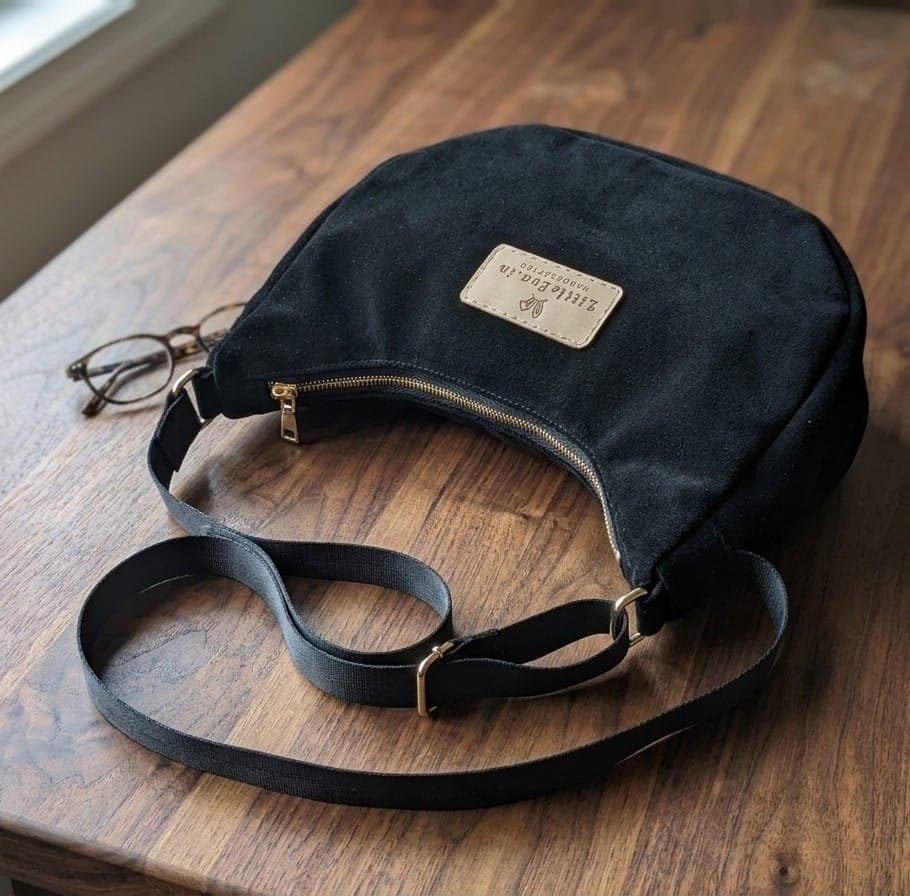
The slide sling is our everyday half-moon bag — small enough for a phone, wallet, and keys, big enough that you do not feel underpacked. A scooped top zipper, gold hardware, and an adjustable black webbing strap make it sit cleanly across the body without bouncing or twisting.
Curved bags look simple until you sew them. Every seam is a continuous curve, the zipper has to follow a scoop without puckering, and a napped fabric shows every wrong cut. Here is how this black sling comes together on our worktable, with photos of the finished bag and the workshop stages.
Watch the bag come together
A short video from our workshop showing this exact sling being made — from cutting the crescent panels to the final strap.
What goes into this bag
- Soft black suede-effect or velvet fabric for the outer body
- Plain cotton lining fabric
- Light sew-in interfacing to keep the crescent shape without stiffness
- Gold-toned metal zipper for the curved top opening
- Black webbing for the adjustable sling strap
- Gold D-rings, a slider buckle, and matching thread
- Leather brand label, chalk, shears, and fabric clips
1Draft the crescent pattern
The pattern is three pieces: a front crescent, a matching back, and a long narrow gusset that becomes the sides and base. The top edge is scooped inward so the zipper sits in a gentle curve rather than a straight line — that scoop is what gives the bag its half-moon silhouette when it is worn.
We draft the zipper curve first, then build the bottom radius around it, because if the top and bottom curves fight each other the finished bag will twist when the strap is loaded.
2Cut the outer and lining pieces
On suede-effect or velvet, nap direction matters as much as grain. Every outer piece is cut with the nap running the same way so the black reads as one deep tone, not a patchwork of shiny and dull panels. Lining and interfacing are cut from the same pattern so the sandwich stays smooth when the bag is turned.
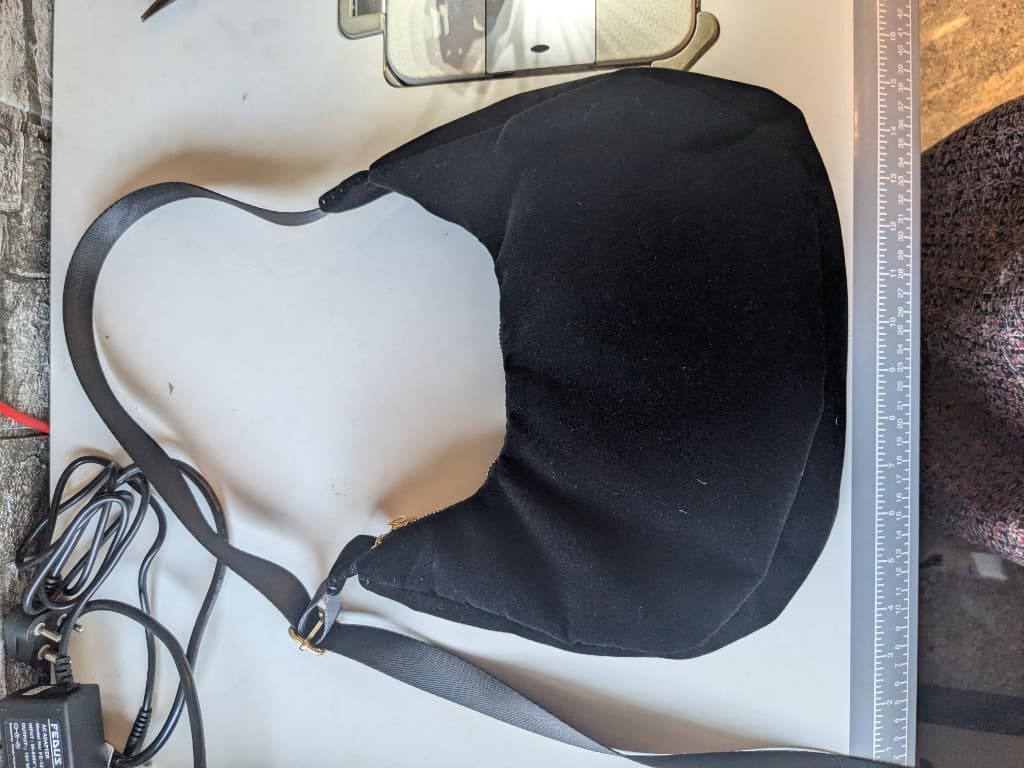
3Interface and stitch the leather label
A light sew-in interfacing goes behind each outer panel — enough for the crescent to hold its curve without turning the bag stiff. Then the leather LittleEva.in label is centred on the front and stitched around its edge while the panel is still flat. Labelling after assembly is harder on a curved, zipped bag; doing it now keeps the stitches even.
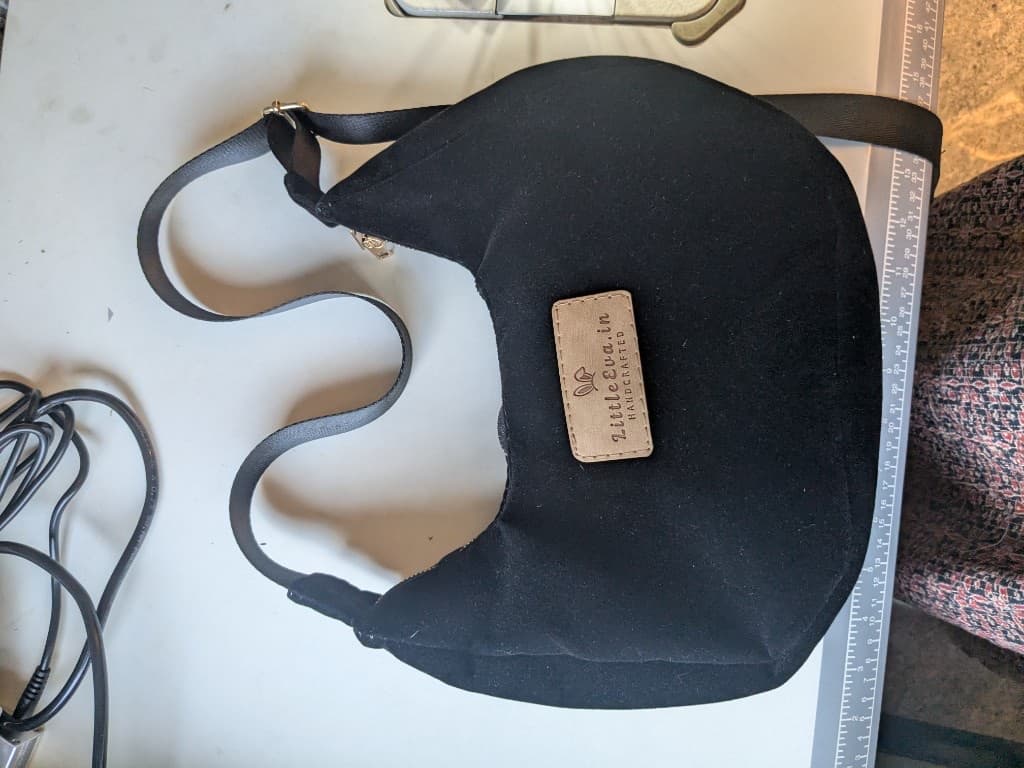
4Install the curved top zipper
The gold zipper is the hardest seam on this bag. It has to follow the scooped top edge of both panels without stretching the fabric or creating waves in the teeth. We clip rather than pin, stitch slowly with a zipper foot, and stop often to check that the scoop still matches front to back.
Once both sides are in, the zipper is opened and closed a few times under tension. If it binds at the deepest part of the curve, that section is unpicked and eased again — a curved zipper that fights you in the workshop will fight the wearer every day after.
5Sew the gusset and close the body
The gusset is clipped around the outer curve of each panel, joining front and back into the half-moon body. Seams are clipped at the tightest radius so the fabric can turn cleanly, then the bag is turned right side out through the zipper opening and checked for an even, rounded base.
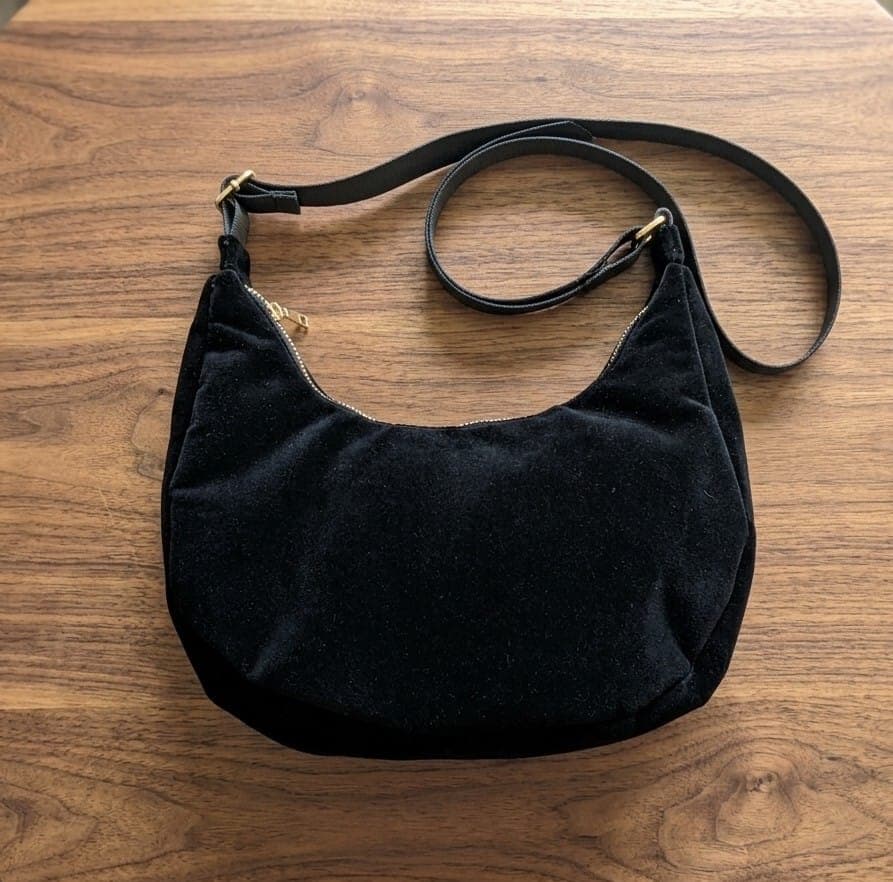
6Drop in the lining and attach the strap tabs
The lining is sewn as a second crescent shell and joined to the zipper tape so every raw edge disappears. At the two upper points of the crescent — the “horns” of the half-moon — we sew short fabric tabs that hold gold D-rings. Those points take the whole strap load, so the tabs are reinforced with a second pass of stitching.
7Thread the adjustable strap and finish
Black webbing is threaded through the D-rings and a gold slider so the strap can move between shoulder and crossbody length. We test the drop on a mannequin, trim threads, wipe the hardware, and press the seams one last time. The bag should sit flat, zip smoothly, and hang without twisting.
8The result
A compact crescent sling that looks like one clean curve — gold zipper and hardware against deep black, leather label on the front, strap ready for daily wear. Because the pattern is this focused, it is easy for us to remake in other fabrics and colours, or to lengthen the strap drop for a taller wearer.
Want one in your colours?
We can make this slide sling in other fabrics and shades, swap the hardware finish, or adjust the strap length. Every bag is made to order in our Kerala workshop.
More from the workshop: Making a Striped Tote Bag · Making a Velvet Diaper Bag